
Sugar Land is a Fort Bend County city, so a Sugar Land injury case usually lands at the Fort Bend County Justice Center in Richmond. Not always, though. A Texas injury suit can also be filed in the county where the at-fault driver lived, or where a company defendant has its main Texas office (Civil Practice and Remedies Code § 15.002), and a lot of the drivers on US 59 through Sugar Land live in Harris County. That can put the case at 201 Caroline in downtown Houston instead. Fort Bend and Harris juries don’t look at injury cases the same way, and neither do the insurers who have to decide what to offer. We pick the courthouse on purpose.
Call (713) 664-4000. The consultation is free, and there’s no fee unless we recover for you. If we don’t recover, you don’t owe us for case expenses either. If an insurance adjuster calls, don’t give a recorded statement until you’ve talked to us.
Car wrecks in Sugar Land
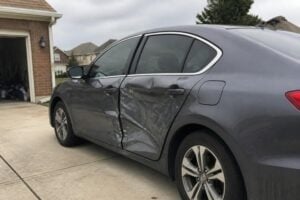
US 59 (I-69) carries most of Sugar Land to work, and a lot of the worst highway crashes we see happen on it, in stop-and-go traffic that turns fast. SH 6, US 90A, Dairy Ashford and University Boulevard are lined with shopping centers and turn lanes, and the Grand Parkway adds toll-road speed on the city’s west side. Most of the car wrecks we see here are rear-end crashes on the freeway and left turns across busy roads.
Sugar Land police write the report inside the city. Outside it, a Fort Bend County sheriff’s deputy or constable usually does, and DPS troopers work a lot of the highway wrecks. The report is the first thing the insurer reads, and the officer usually arrived after the crash and pieced it together from whoever stuck around. We check it against the photos, the damage, the witnesses and the cars’ event data recorders, and we ask nearby businesses for video before it’s recorded over.
From the scene to the ER
Memorial Hermann Sugar Land and St. Luke’s Health Sugar Land both have emergency rooms and state trauma designations. The most serious injuries go up 59 to the Level I trauma centers in the Texas Medical Center. The notes from that first visit carry a lot of weight with the insurer, and so does following up when your doctor tells you to. A gap in treatment is the first thing an adjuster points to when he says you weren’t really hurt.
What your Sugar Land case is worth
Fault. Texas reduces your recovery by your percentage of fault, and if a jury puts you over 50 percent, you get nothing (Civil Practice and Remedies Code §§ 33.001, 33.012). An adjuster asking friendly questions about your speed is building that percentage. We answer the fault question with evidence.
The coverage. Texas only requires $30,000 per injured person and $60,000 per crash (Transportation Code § 601.072). A serious injury goes through that fast. We look for every other policy: the vehicle owner’s, the driver’s employer if he was working, a rideshare company’s if one was involved, and your own uninsured and underinsured motorist coverage (Insurance Code § 1952.101). Your personal injury protection pays medical bills and lost wages no matter who caused the wreck (Insurance Code § 1952.155). Texas insurers have to put it in every auto policy unless someone named on the policy turned it down in writing (§ 1952.152). The standard amount is $2,500 per person, and plenty of policies carry more.
Medical bills. You recover what was actually paid or is still owed for your care, not the full amount billed (Civil Practice and Remedies Code § 41.0105). How your treatment gets paid for changes that number, so we plan it with you early.
The rest. Lost income, lost earning capacity, pain and what the injury took from your life at home all count, but only if the medical records back them up. We make sure your doctors write down everything the wreck took from you.
More than car wrecks
We also handle injuries from 18-wheeler crashes on 59 and the Grand Parkway, crashes caused by drunk drivers, Uber and Lyft crashes and falls on unsafe property at stores and apartment complexes. A business that invites you in has to use reasonable care to fix or warn about dangerous conditions it knew about or should have known about. See our 18-wheeler and premises liability pages.
Deadlines, and why Fort Bend cases can move slowly
You generally have two years from the injury to file suit (Civil Practice and Remedies Code § 16.003). A claim against a city or county needs notice within six months, and a city charter can require it sooner (§ 101.101). Fort Bend’s general-jurisdiction district courts have long shared criminal and civil dockets, and Texas law puts criminal trials first (Code of Criminal Procedure art. 32A.01). The Legislature added the 501st and 502nd District Courts, which opened December 1, 2025, as the caseload kept growing. File early and push the case, because nobody else will.
Results
We recovered a $2.95 million settlement for a client rear-ended by a commercial truck driver who was following too closely, and $100,000 for a client hit by a driver who ran a red light. See all of our settlements and verdicts. Prior results do not guarantee a similar outcome.
Hurt in Sugar Land? Call Blass Law
Jay Blass Cohen was born and raised in Houston and has practiced here since 2009. We take injury cases across Fort Bend County, and we prepare every one as if it’s going to trial. If you were charged after a crash, see our Sugar Land DWI page.
Call (713) 664-4000. If it happened this week, call now, while the video and the crash data still exist.
Reviewed by Jay Blass Cohen, founder of Blass Law PLLC, ACS-CHAL Forensic Lawyer-Scientist, certified Drug Recognition Expert, and SFST instructor, serving Houston since 2009. This article is general information, not legal advice for your situation. Prior results do not guarantee a similar outcome.