
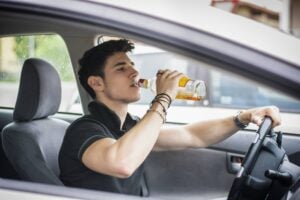
If you’re under 21 in Texas, there are two different drinking-and-driving charges you can face, and the difference between them is enormous. Driving with any detectable amount of alcohol is a Class C misdemeanor under the Alcoholic Beverage Code. It’s punished with a fine, not jail, but it’s still a criminal conviction, and if it’s your only alcohol conviction as a minor you can apply to have it expunged once you turn 21. Driving while intoxicated is the same charge an adult gets, with jail on the table and a conviction that can’t be expunged. For a driver under 21, a DWI conviction also brings a one-year license suspension. Probation with an ignition interlock cuts that to 90 days, and during those 90 days you can drive only with the interlock and an occupational license. Which one you’re facing, and whether a DWI can be resolved as the lesser charge, is the first thing we look at.
Call (713) 664-4000. Parents call us too. You have 15 days to request a hearing on the license suspension, and for most people the clock started the day of the arrest.
Minor DUI and DWI side by side
| DUI by a minor | DWI | |
|---|---|---|
| Law | Alcoholic Beverage Code § 106.041 | Penal Code § 49.04 |
| What the State has to prove | Driving in a public place with any detectable amount of alcohol | Driving in a public place while intoxicated: a 0.08 alcohol concentration, or loss of normal use of your mental or physical faculties |
| First offense | Class C misdemeanor: a fine, 20 to 40 hours of alcohol-related community service, and an alcohol awareness class. No jail | Class B misdemeanor: 72 hours to 180 days in jail and up to a $2,000 fine. Class A at 0.15 or more |
| License on conviction | No automatic suspension on a first or second conviction, though the administrative suspension below still applies. Skipping the alcohol awareness class can cost up to six months, or up to a year if you already have a minor alcohol conviction (§ 106.115(d)) | One year if you were under 21. On probation it’s a 90-day suspension, and you can drive during it only with an interlock and an occupational license (Transp. Code § 521.342(b); Code of Criminal Procedure Art. 42A.407(f), (g)) |
| Record | With only one Alcoholic Beverage Code conviction as a minor, it can be expunged at 21 (§ 106.12) | A conviction can’t be expunged, but a first DWI under 0.15 can often be sealed with an order of nondisclosure after a waiting period, whether it ended in deferred adjudication or probation |
A third minor DUI, when you’ve already been convicted or received deferred disposition twice, can mean up to 180 days in jail and a $500 to $2,000 fine. Deferred is off the table, and the conviction brings an automatic license suspension (§ 106.041(c), (f), (h); Transp. Code § 521.342(a)). A driver under 21 who gets probation after a DWI conviction has to drive with an ignition interlock as a condition, no matter what the test result was (Code of Criminal Procedure Art. 42A.408(e)). If you were 16 or younger, a DWI goes to juvenile court, which works differently, and that changes the strategy.
Minor DUI is not a lesser included offense of DWI (§ 106.041(g)). That matters, because it means a jury can’t simply find you guilty of the smaller charge instead. Getting a DWI resolved as a minor DUI takes an agreement with the prosecutor to file the lesser charge, and building the case for that agreement is where most of our work in these cases goes.
Your license: the ALR suspension
The license suspension after the arrest is separate from the criminal case, and it starts on its own clock. For a driver under 21, any detectable alcohol is enough, even well under 0.08. The suspension is 60 days on a first offense, 120 days with one prior alcohol driving conviction and 180 days with two (Transp. Code § 524.022(b)). Refusing the breath or blood test means 180 days, or two years if your driving record shows an alcohol or drug related license suspension in the ten years before the arrest (§ 724.035).
DPS has to receive your hearing request within 15 days of when you got the notice, and for most people that’s the day of the arrest. If the notice came by mail, the law treats it as received five days after it was mailed (§§ 524.013, 524.031, 724.041). Miss that and the suspension goes into effect with no hearing. If we subpoena the arresting officer, the hearing is also the first chance to question him under oath, before the criminal case goes anywhere. See our ALR hearing page.
How we defend underage drinking and driving cases
The stop. Officers stop young drivers for small things late at night, and if the stop wasn’t legal, everything after it can be suppressed.
The alcohol evidence. “Any detectable amount” still has to be proven with a reliable test. A roadside portable breath device isn’t the same as an evidentiary breath test, mouth alcohol can inflate a reading, and a blood result is only as good as the lab work behind it. Jay Blass Cohen is a certified instructor in the standardized field sobriety tests, a certified Drug Recognition Expert and an ACS-CHAL Forensic Lawyer-Scientist, so we know how the roadside tests are supposed to be given and how breath and blood results go wrong.
What you told the officer. Young drivers tend to answer every question at the roadside: where they were, what they drank and how much. Those answers are often the State’s best proof of drinking besides the test itself. Questions during an ordinary traffic stop usually don’t require warnings. But when the questioning kept going after you were effectively under arrest and nobody read you your rights, we move to keep those statements out.
The record. For a young client, the goal isn’t only avoiding jail. It’s coming out of the case with something that can be cleared later, before it follows you into college applications, scholarships, internships and your first job. Our pages on DWI for college students and clearing a DWI record go into those options.
Results
A Harris County jury found our client not guilty of DWI after a 0.242 breath test, in a case where the client had been found asleep in a moving lane of traffic and failed the field sobriety tests. See more of our case results. Prior results do not guarantee a similar outcome.
Charged as a minor in Houston? Call Blass Law
Jay Blass Cohen has defended DWI cases in Houston since 2009 and has never worked for the prosecution. We’ll tell you which charge you’re really facing and what it will take to keep it off your record for good.
Call (713) 664-4000. The 15-day deadline for the license hearing usually starts the day you’re arrested.
Reviewed by Jay Blass Cohen, founder of Blass Law PLLC, ACS-CHAL Forensic Lawyer-Scientist, certified Drug Recognition Expert, and SFST instructor, serving Houston since 2009. This article is general information, not legal advice for your situation. Prior results do not guarantee a similar outcome.