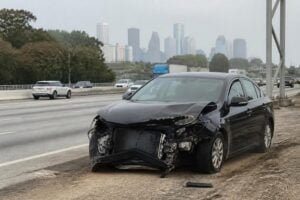
Maybe it was stop-and-go on the Katy Freeway, or somebody who ran the light at Westheimer and Kirby. Either way, there was glass on the dash and your heart is still pounding. Take a breath. You’re okay enough to be reading this, and that’s a start. Let a Houston car accident lawyer take the insurance calls and the paperwork. You’ve got enough going on.
I’m Jay Blass Cohen. I’ve represented injured people in Houston since 2009, and what you do in the first few weeks after a wreck shapes the whole case. Call (713) 664-4000 and we’ll take it from here.
First, take care of the people. Then the case.
Nothing on this page matters more than your health. Get checked out, even if you feel “mostly fine.” Adrenaline is a great liar. It masks whiplash and concussions for hours or days, and the gap between “I felt okay at the scene” and a real diagnosis is exactly the gap the other side’s insurer will use against you later.
For a legal consultation, call (713) 664-4000
So see a doctor, and follow the treatment plan even when the appointments get old. Keep every bill and every discharge sheet. Those records are how we prove what this wreck cost you. Not sure you need to go? Read whether to see a doctor when you feel fine.
Check your own policy too. Personal injury protection pays medical bills and lost wages no matter who caused the wreck, and your uninsured/underinsured coverage can step in if the other driver has little or none. We’ll read your policy with you.
What to do at the scene, if you can
If you’re able to move and it’s safe, a few things help your case more than anything a lawyer can do after the fact:
- Call the police. If anyone is hurt, Texas law requires it (Transportation Code § 550.026). A crash report creates an official record. Get the report number.
- Take photos. Both vehicles, the damage, the position on the road, skid marks, the intersection, traffic signals, and any injuries you can see.
- Get names and numbers. The other driver, sure, but witnesses matter even more. A neutral stranger who saw the whole thing is worth a lot.
- Say little. Don’t apologize, don’t guess about fault, don’t downplay how you feel. “I’m sorry” at the scene has a way of becoming “the other driver admitted fault” in an adjuster’s notes.
If you couldn’t do any of that because you were hurt or in shock, that’s normal, and it does not sink your case. We know how to reconstruct what happened from the evidence that’s left.
What Texas law requires of you at the scene
Some of this isn’t optional. If a crash hurts someone or damages a car that somebody is driving, you have to stop and stay at the scene (Transportation Code §§ 550.021, 550.022). You have to give your name, address, registration number and insurance company, show your license if asked, and help anyone who’s hurt, including getting them to a doctor or hospital if they need it (§ 550.023). And if someone is injured or a car can’t be driven safely, you have to notify the police right away (§ 550.026). Driving off is a crime, and the penalty climbs fast when somebody is hurt.
Click to contact our Houston lawyer today
You don’t fill out your own crash report anymore. Texas did away with the driver’s report, so the record that counts is the officer’s CR-3. That’s one more reason to get police to the scene. Our page on getting your Houston crash report walks through requesting a copy once it’s filed.
Why the other driver’s insurer calls so fast
The other driver’s insurer isn’t on your side, and it isn’t neutral either. It makes money by paying you as little as possible.
Complete a Case Evaluation form now
That friendly adjuster who calls a day or two later wants a “quick recorded statement to close this out.” The sympathy is part of the pitch. The real goal is to get you saying something they can use to shrink your check, or to lock you into a lowball number before you even know how hurt you are.
You don’t have to give the other side’s insurer a recorded statement, and you don’t have to take the first offer. Don’t sign anything or accept a settlement until you understand the full extent of your injuries. Once you sign a release, you can’t go back for more if that “minor” neck pain turns into surgery six months later.
Don’t sit on it, but don’t get rushed into a bad deal either. Let us do the talking with the insurer so you can focus on healing.
What not to do in the weeks after
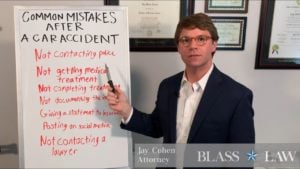
Don’t say you’re fine, not to the officer and not to the adjuster. Say you’re getting checked out. “I’m fine” in a police narrative becomes the first exhibit in the argument that you weren’t hurt.
Don’t sign a medical authorization from the other side’s insurance company. It can open your whole medical history so they can hunt for something else to blame. Don’t give them a recorded statement either. You aren’t required to.
Don’t post about the wreck or your recovery. A photo of you at a birthday party or a Texans game gets printed and put in the claim file, no matter how much you hurt the next morning.
And don’t skip appointments. Gaps in treatment are the first thing an adjuster uses to knock down a claim. Keep a simple log of the work you miss and the things you can’t do anymore, and check the officer’s report for mistakes. They happen, and they can be corrected if you catch them early. If the adjuster has already called, read what to say when the insurance company calls.
How long you have to file in Texas
In Texas, you generally have two years from the date of the crash to file a personal injury lawsuit (Tex. Civ. Prac. & Rem. Code § 16.003). Two years can feel like forever when you’re hurting. It isn’t. And if a city truck, a METRO bus or another government vehicle hit you, notice can be due in a matter of months.
Evidence disappears fast. Skid marks fade, dashcam and traffic-camera footage gets overwritten, vehicles get repaired or scrapped, and witnesses forget details or move away. The sooner we’re on it, the more of the story we can lock down while it’s still there.
When the other driver was drunk, the science is on your side
My background is a little different from most injury lawyers’. I’m an ACS-CHAL Forensic Lawyer-Scientist, which means hands-on lab training in the chromatography used to test blood for alcohol and drugs. I’m also a certified Drug Recognition Expert and a certified instructor in standardized field sobriety testing.
The same intoxication science the State uses to prove a DWI, I use to prove the drunk driver’s impairment for the person they hurt. I read breath and blood evidence for a living, and I know where it’s strong and where it falls apart.
Drunk-driving cases can also open up avenues a normal fender-bender doesn’t. If the drunk driver caused a serious bodily injury or a death, the conduct can amount to intoxication assault or intoxication manslaughter, and the usual cap on punitive damages doesn’t protect him (Tex. Civ. Prac. & Rem. Code § 41.008(c)). You still have to prove gross negligence by clear and convincing evidence, and the intoxication evidence is how we do it. And the Texas Dram Shop Act can put a bar or restaurant on the hook if it kept serving a driver when it was apparent he was obviously intoxicated to the point of being a clear danger, and that intoxication caused the wreck (Alcoholic Beverage Code § 2.02). When someone chose to drive drunk and hurt you, there may be more than one party responsible.
How a settlement actually gets paid
When a case settles, the other side’s insurance company sends the money to our trust account, not straight to you. Before anything goes out, we deal with the liens. A hospital that admitted you within 72 hours of the wreck can file a lien under Chapter 55 of the Property Code, and health insurers and Medicare have repayment rights too. Those numbers are often negotiable, and every dollar we knock off goes to you. Then you get a written breakdown of where every dollar went before you sign off.
What a good car accident lawyer actually does for you
We take the fight off your plate. We investigate the crash and deal with the adjusters, so you never have to take another one of their calls. Figuring out what your case is worth means counting medical bills, lost wages, future care, and the pain that doesn’t show up on an X-ray. If the insurer’s number is fair, we settle. If it isn’t, we push for trial.
At Blass Law, we’ve recovered millions for injured Texans, including a $2.95 million result in a semi-truck case. Prior results do not guarantee a similar outcome, and every case stands on its own facts. But we don’t flinch when the other side digs in.
Talk to us. It’s free.
If you or someone you love was hurt in a car accident in Houston, call Blass Law at (713) 664-4000 or reach out through our site. The consultation is free, and there’s no fee unless we recover for you. If we don’t recover, you don’t owe us for case expenses either. When you call, you’ll get people who know your case. We don’t farm it out to a call center.
Take that breath. Then let us even the odds.
Blass Law PLLC
917 Franklin St, Suite 400, Houston, TX 77002
(713) 664-4000
Keeping Innocent People Innocent®
This article is general information, not legal advice, and doesn’t create an attorney-client relationship. Prior results do not guarantee a similar outcome.
Call or text (713) 664-4000 or complete a Case Evaluation form