
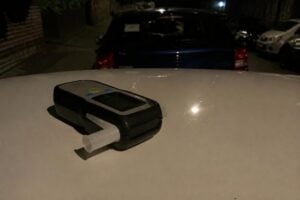
A Breathalyzer test is one piece of evidence in a DWI (driving while intoxicated) case. If you fail a Breathalyzer in Texas, you are not automatically guilty of a DWI. Nor does it mean you will automatically be found guilty if your case goes to trial. It is substantial evidence the state’s prosecutors will use against you. Your lawyer, however, can challenge those results based on several factors.
Call (713) 664-4000. Jay is an ACS-CHAL Forensic Lawyer-Scientist trained in forensic chromatography, and a breath number is exactly the kind of evidence he takes apart.
Do I Have to Submit to a Breathalyzer Test?
Under Texas’s implied consent law, you’re considered to have agreed to a breath or blood test if you’re arrested for DWI. But you can still refuse, and police can’t force you to blow. If you refuse, they can apply for a warrant for your blood. Without a warrant or a real emergency, they can’t take it. State law also directs officers to get a specimen after a refusal in certain cases, including when:
- You were in an accident that resulted in serious or fatal injuries.
- You were previously convicted of intoxication assault or intoxication manslaughter.
- You were previously convicted of DWI twice or more or with a minor vehicle passenger.
If any of the above is true, the officer is required to get a specimen, which usually means a warrant for your blood. You should also know that refusing the test will have consequences. Before asking for a specimen, the officer has to explain those consequences to you, out loud and in writing. A Houston DWI lawyer will clarify the potential consequences of your case.
What Are the Consequences of Refusing to Have My BAC Tested?
Except under specific circumstances, you will not be forced to submit to a Breathalyzer or blood test to measure your BAC. However, refusing to submit to BAC testing may result in a drivers license suspension that is longer than it would have been if you consented to a test. However, whether you consent or refuse, you are still entitled to an ALR hearing to try and prevent your license from being suspended. But you only get 15 days from the notice to ask for that hearing. Miss it, and the suspension starts on the 40th day.
According to Texas Department of Public Safety (DPS) guidelines, refusing the test means a 180-day driver’s license suspension. If your driving record shows an alcohol- or drug-related enforcement contact in the 10 years before the arrest, it’s two years.
Either outcome could inconvenience you and your family during the suspension period. It can also mean you face the hefty costs of alternative transportation. Public transportation, rideshare services, taxicabs, and other transportation options can add up quickly.
How Do I Know if I Failed a Breathalyzer?
According to Texas Penal Code § 49.01, a breath test measures alcohol concentration as grams of alcohol per 210 liters of breath. You failed the test if the result is 0.08 or more. Commercial drivers can also lose their CDL at 0.04 while driving a commercial vehicle.
Remember, the test results are only one piece of evidence in your DWI case. Plenty of things can throw off a breath test, including residual alcohol, certain diets, some medications and problems with the testing machine. A good lawyer digs into each of these and what it means for your case.
How Will My Lawyer Challenge the Breathalyzer’s BAC Results?
While the results of a Breathalyzer test can damage your DWI defense, your lawyer can challenge them. On your own, it can be hard to know how to challenge the state. Doing so can also be stressful and intimidating without legal guidance and support.
To build up your defense, your lawyer will:
- Explore any physiological issues that could make you a bad candidate for a breath test
- Question the calibration of the testing device
- Request the testing device’s maintenance records
- Challenge the validity of the test results
Your lawyer can also use the discovery process to examine the evidence the state has against you. They can also interview witnesses and review the details of your arrest for possible violations of your rights.
How Will My Lawyer Help With My Criminal Case?
Whether you submit to a Breathalyzer test or pass or fail it, you should consider hiring a lawyer to represent you if you are arrested on a DWI charge. A lawyer can fight to get your case dismissed, negotiate a plea bargain on your behalf or try your case to a jury. They can also examine your case’s details and explain the best defense options for you.
Once an attorney represents you, they will:
- Investigate every detail of your case.
- Locate and interview supporting witnesses and document their accounts.
- Look at whether the officer had reasonable suspicion to pull you over.
- Try to prove no probable cause for your arrest exists.
- Review the details of your arrest for any rights violations.
Each step will allow your attorney to build a solid defense strategy. They will focus on mitigating your case and helping you avoid the state’s harshest penalties. Your lawyer is also your advocate. They will fight for bail to avoid you spending a long time in jail while your case is being developed.
How Will a DWI Conviction Affect My Life?
Even without a conviction, a DWI arrest follows you. A conviction adds more:
- You could be required to install an ignition interlock device on your car.
- You could be ineligible for many types of professional licenses.
- Your auto insurance rates could increase significantly.
Depending on the severity and outcome of your charges, you may be ineligible for expunction or an order of nondisclosure, which means the arrest and charge can stay on your record and show up on background checks. A lawyer can help you avoid conviction and protect your present and future.
Get Help With Your DWI Case Now
You are not automatically guilty of a DWI if you fail a Breathalyzer in Texas. Your case requires additional investigation, and our law firm can help you build a credible defense strategy.
An attorney can help you fight back after a DWI arrest. When our team at Blass Law represents you, you get an ACS-CHAL Forensic Lawyer-Scientist, Jay Blass Cohen, on your side. The 15-day clock to request your ALR hearing started when you got the notice, so don’t wait.
Charged with this in Houston, or worried you’re about to be? Call (713) 664-4000 or fill out the form on this page for a free, confidential consultation. We’ll tell you where your case stands and what we’d do first.

A Houston DWI and criminal defense attorney since 2009 who has never worked for the prosecution. Jay is an ACS-CHAL Forensic Lawyer-Scientist, a certified practitioner and instructor of Standardized Field Sobriety Testing, a certified Drug Recognition Expert, and trained in forensic chromatography. He is a member of the National College for DUI Defense, a founding member of the DUI Defense Lawyers Association, and a commissioner on the Texas Indigent Defense Commission, appointed by Gov. Abbott in 2023.
Last reviewed July 2026 · This article is legal information, not legal advice. Read Jay’s full bio →