
If you’re wondering what to say in court for a DWI, the best answer is usually nothing. Your Houston DWI lawyer will handle the talking, protect your rights, and guide you through every step of the process.
Speaking in court without legal guidance can hurt your case. With Blass Law by your side, you’ll know exactly when to speak, what to say, and how to present yourself in the best possible light.
What Will My Lawyer Say for Me?
What your lawyer will say on your behalf depends on the specifics. If you are at your arraignment, your attorney will:
- Enter a plea for you, which will likely be “not guilty”
- In most cases, file a written waiver so you don’t have to come to the arraignment at all (Code of Criminal Procedure Art. 26.011)
An arraignment only does two things: the court confirms who you are and takes your plea (Art. 26.02). Bond was already set at the magistrate hearing after your arrest, and the evidence gets fought later, through motions and, if it comes to it, trial.
When Should I Speak?
At the beginning of your court appearance, the judge will ask you for your name; give your name, followed by “Your Honor.” The judge will then ask you if your attorney is here with you, say “Yes, Your Honor,” and your lawyer will take over from there.
What Should You Do If You Are Asked to Speak in Court?
If you are directed to speak, be polite and respectful. The judge wants concise answers, not ramblings.
Don’t:
- Raise your voice to the judge under any circumstances
- Refuse to speak
- Admit guilt
- Make excuses
- Argue (Your attorney will do that for you.)
or the magistrate who sees you after your arrest releases you on a personal bond.
As we discussed above, at your arraignment, the judge will read the charges against you, and your attorney will advise you to plead “not guilty.”
Nothing gets argued at the arraignment itself. The fight over the evidence comes later, through a motion to suppress and, if it comes to it, a jury trial.
Your attorney can work with the prosecution to:
- Get your charges dropped
- Get your charges reduced
- Possibly get you into pre-trial intervention
- Get probation
- Make a plea deal
If the judge decides to move forward with your case, your attorney will begin building a defense against the charges. Depending on the specifics, your defense may include arguing:
- Violation of your rights: If the police officer who pulled you over didn’t establish reasonable suspicion or probable cause, they have violated your rights, and the evidence that came from the stop can be thrown out.
- Inaccurate results: Inaccurate results are possible with both field sobriety tests and breath and blood tests. Our founder, Jay Blass Cohen, is a certified field sobriety testing practitioner and instructor. He knows how these tests should be administered and all the mistakes that can be made. Breathalyzer tests can lead to inaccurate results if the machine is improperly maintained, improperly calibrated, or improperly used. In other cases, inaccurate results could be the result of diet or a medical condition. For example, ketosis from the Keto diet could cause a false positiveOur founder recently got charges dismissed for a man who blew a false positive due to his body being in ketosis. Prior results do not guarantee a similar outcome.
- You weren’t drivingThe State has to prove you were operating the vehicle, and Texas courts look at everything, not just where the keys were. Asleep in a parked car with the engine off is a very different case from asleep at a red light in drive. When the State can’t put you behind the wheel and in control, the case has a real problem.
- The results are not admissible: The results from Breathalyzers that cops carry in their pockets are not admissible. If they did not test you with the Intoxilyzer 9000 or get a blood test, they have no number to show the jury, and the case rests on the officer’s opinion of your driving and field sobriety tests.
Why Trust Our Team With Your DWI Case
We’ve been in Harris County DWI courts since 2009, and we try these cases. We have handled all types of DWI charges in Texas and gotten many acquittals or dismissals.
- Our client, a commercial driver, was involved in an accident and failed all field sobriety tests. We got a “not guilty verdict” in the DWI misdemeanor case during a Harris County jury trial.
- Our client, who was charged with misdemeanor DWI, was found asleep in his car in the middle of the road. He failed all field sobriety tests, and a blood test found carisoprodol, meprobamate, alprazolam, hydrocodone, norhydrocodone, and dihydrocodeine in his system. We got a “not guilty” verdict.
- Our client, a lawyer, faced a second offense DWI charge after being pulled over for driving with one headlight, admitting to drinking, and failing field sobriety tests. We got a “not guilty” verdict in a Fort Bend County court.
- Our client was charged with a third-offense DWI after being pulled over for failing to use a turn signal. They blew a .128 and also tested positive for alprazolam. We filed a motion to suppress in a Harris County court, and the case was dismissed. Prior results do not guarantee a similar outcome.
We have the experience and skill to get cases dismissed or acquitted. Jay Blass Cohen, our founding attorney, is an ACS-CHAL Forensic Lawyer-Scientist and trained in chromatography for both drugs and alcohol.
Let Our Team Speak for You in Court
Don’t trust your case to an inexperienced criminal defense lawyer. Trust your case to a firm with a decade and a half of DWI dismissals and “not guilty” verdicts. Trust Jay Blass Cohen to speak for you in court.
When you call, tell us your court date. We’ll tell you whether you even need to be there.
Charged with this in Houston, or worried you’re about to be? Call (713) 664-4000 or fill out the form on this page for a free, confidential consultation. We’ll tell you where your case stands and what we’d do first.
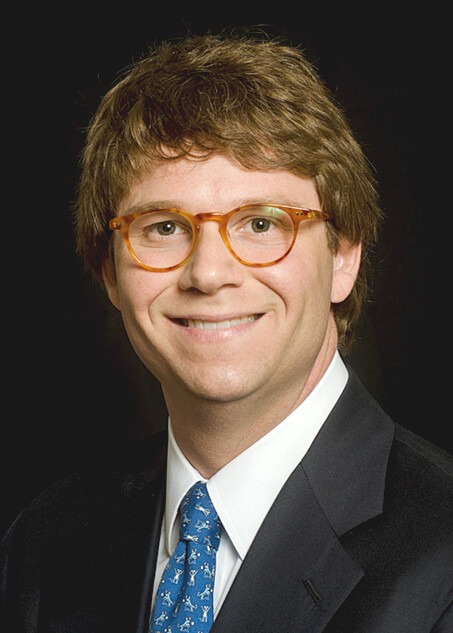
A Houston DWI and criminal defense attorney since 2009 who has never worked for the prosecution. Jay is an ACS-CHAL Forensic Lawyer-Scientist, a certified practitioner and instructor of Standardized Field Sobriety Testing, a certified Drug Recognition Expert, and trained in forensic chromatography. He is a member of the National College for DUI Defense, a founding member of the DUI Defense Lawyers Association, and a commissioner on the Texas Indigent Defense Commission, appointed by Gov. Abbott in 2023.
Last reviewed July 2026 · This article is legal information, not legal advice. Read Jay’s full bio →