
Most first-offense DWI probation in Harris County runs somewhere between one and two years. The statute itself only sets a ceiling: under Code of Criminal Procedure Art. 42A.053(f), the maximum period of community supervision in a misdemeanor case is two years. There’s no statutory minimum, so any number you read below that is somebody describing local practice, not quoting a law.
The part nobody puts on these pages matters more than the number. On a DWI, you serve every day of it. Texas lets judges cut community supervision short on most offenses, and it specifically carves DWI out of that.
On probation now, or weighing an offer? Our Houston DWI probation lawyer keeps small problems from becoming jail.
You Cannot Get Off DWI Probation Early in Texas
Article 42A.701(a) is the early-termination statute. It lets a judge reduce or terminate community supervision once the defendant has satisfactorily completed one-third of the original period or two years, whichever is less. Subsection (b) goes further and requires the judge to review the case at the halfway mark and consider cutting it short.
Then Art. 42A.701(g) takes it all away: “This article does not apply to a defendant convicted of an offense under Sections 49.04-49.08, Penal Code.”
That range runs from DWI and DWI with a child passenger through boating while intoxicated, intoxication assault and intoxication manslaughter. If you are convicted of any of them and placed on community supervision, the early-termination machinery is closed to you. Eighteen months means eighteen months, whether you do everything right or not.
The length you accept at the plea is the length you serve, which is why the number gets negotiated then and never again.
Deferred Adjudication Is the One Version That Can End Early
Deferred adjudication is not a conviction. The judge defers the finding of guilt, and Art. 42A.701(g) is written to reach a defendant “convicted of” a Chapter 49 offense, so it does not reach deferred.
What governs deferred instead is Art. 42A.111(b), which lets the judge dismiss the proceedings and discharge the defendant before the period expires, if in the judge’s opinion the best interest of society and the defendant will be served. The only carve-out in that subsection is for offenses requiring sex offender registration. And Art. 42A.111(c) says a dismissal and discharge is not a conviction for purposes of the disqualifications and disabilities the law attaches to one.
Texas opened deferred adjudication to first-offense DWI in 2019 through House Bill 3582. It is not available to everyone. Article 42A.102(b)(1)(B) bars it if you held a commercial driver’s license or learner’s permit at the time of the offense, or if your alcohol concentration was 0.15 or more. And Art. 42A.102(b)(1)(C) bars it on any case where punishment can be increased under § 49.09, which is why a second DWI cannot get it.
Straight probation or deferred is negotiated before the plea, not after. On charges outside DWI, who is eligible for probation in Texas turns on the offense, the indictment and your record. One of them can end early and leaves no conviction. The other cannot and does. That is worth a phone call by itself.
What the Conditions Actually Are
The judge sets the conditions, and most of the list people expect is discretionary. Two things are not.
The DWI education program has a hard deadline. Under Art. 42A.403(a), a judge placing you on community supervision for a Chapter 49 offense shall require you to finish a state-regulated DWI education program before the 181st day after supervision is granted. It can be waived or extended, but only on a written motion showing good cause.
Missing that deadline costs you your license. Article 42A.406(c) says that if DPS never receives notice you completed the program in time, the department shall revoke your driver’s license or refuse to issue one. Subsection (d) then charges you a $100 reinstatement fee to get it back. People lose their license this way months after the case is over, for a class they forgot to schedule.
The ignition interlock splits by your blood or breath number. Art. 42A.408(b) lets the court order one on any Chapter 49 community supervision. Art. 42A.408(c)(1) makes it mandatory if an analysis showed an alcohol concentration of 0.15 or more. Under the limit and it’s the judge’s call. At 0.15 it isn’t.
The rest is the familiar list, and the judge can add to it or drop items from it: reporting to a supervision officer, community service up to the 200-hour ceiling for a Class A or 100 for a Class B under Art. 42A.304(b), an alcohol and drug evaluation, testing, no new offenses, no alcohol, permission before leaving the county, and supervision fees.
There Is No Mandatory Jail on a First-Offense DWI Probation
Art. 42A.401(a) lists the intoxication offenses where a judge granting community supervision must also order jail as a condition of it. Every entry on that list is an enhanced or aggravated case: 72 hours if you were punished under § 49.09(a), which is a second DWI; five days if § 49.09(h) also applies; ten days on a third under § 49.09(b); 30 days on intoxication assault; 120 days on intoxication manslaughter.
A plain first offense under § 49.04 is not on that list. No statute requires the judge to make you serve days as a condition of first-offense probation. Compare that to a second DWI, where Art. 42A.401(a)(1) puts a 72-hour floor under probation. If the State abandons the prior, that floor goes away with it.
What a First DWI Actually Costs
A first DWI is a Class B misdemeanor under Penal Code § 49.04(b), punishable by 72 hours to 180 days in county jail and a fine up to $2,000. An open container in your immediate possession raises the jail minimum to six days under § 49.04(c). An alcohol concentration of 0.15 or more at the time of the analysis makes it a Class A under § 49.04(d). Driving while intoxicated in a school crossing zone is a state jail felony under § 49.04(e), added by S.B. 826 effective September 1, 2025.
The fine is not the whole bill. Transportation Code § 709.001(b) adds a separate state fine of $3,000 on a first conviction within a 36-month period, and $6,000 on any conviction where the analysis showed 0.15 or more. Section 709.001(c) requires the court to waive that fine entirely on a finding of indigence, and subsection (d) says what proves it: a tax return or wage statement showing household income at or below 125 percent of the federal poverty guidelines. Nobody waives it unless you ask.
What Happens If You Violate Probation
The State files a motion to revoke, and the standard at the hearing is a preponderance of the evidence, not beyond a reasonable doubt. That is a much lower bar than the one that applied to the original charge, and it catches people who assume a revocation is a second trial.
Two things work in your favor. Art. 42A.751(i) says that where the only allegation is failure to pay supervision fees or court costs, the State must prove you were able to pay and did not. Being broke is not a violation, though you have to put that on the record.
And revocation is not automatic. Under Art. 42A.752(a), a judge who finds a violation may continue or modify community supervision instead, adding conditions, extending the period, raising the fine, or ordering a short jail term. Most first violations get handled that way when somebody shows up prepared to ask for it.
Is Probation Even What You Want?
Not always, and this surprises people. Some clients tell us that if they have the option, they would rather sit down for a few days in jail than spend two years reporting, testing, paying fees and asking permission to leave the county. On a Class B with no accident and a decent record, that trade is worth doing the math on.
The better question is whether you should be taking either one. Before anyone talks about the length of probation, the stop gets reviewed, the video gets watched, the field sobriety scoring gets checked against how the officer was trained, and the blood or breath result gets taken apart. A case that ends in a dismissal or a reduction has no probation length at all.
Facing a First DWI in Houston? Call Blass Law
We have handled DWI cases in Harris County and the counties around it since 2009. Jay is an ACS-CHAL Forensic Lawyer-Scientist, a certified Drug Recognition Expert and a certified instructor in standardized field sobriety testing, which is why the science in these cases gets attacked instead of accepted.
If an offer is on the table, bring it to us before you take it. Whether it’s deferred or straight probation, and how many months it runs, are decided once.
Call (713) 664-4000 for a free consultation.
Charged with this in Houston, or worried you’re about to be? Call (713) 664-4000 or fill out the form on this page for a free, confidential consultation. We’ll tell you where your case stands and what we’d do first.
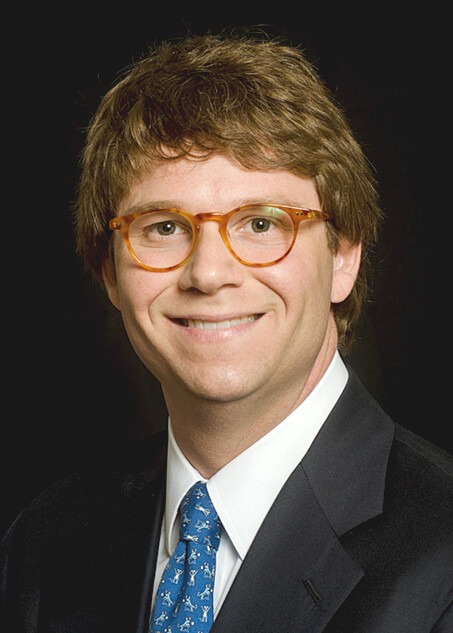
A Houston DWI and criminal defense attorney since 2009 who has never worked for the prosecution. Jay is an ACS-CHAL Forensic Lawyer-Scientist, a certified practitioner and instructor of Standardized Field Sobriety Testing, a certified Drug Recognition Expert, and trained in forensic chromatography. He is a member of the National College for DUI Defense, a founding member of the DUI Defense Lawyers Association, and a commissioner on the Texas Indigent Defense Commission, appointed by Gov. Abbott in 2023.
Last reviewed September 2026 · This article is legal information, not legal advice. Read Jay’s full bio →