
Your personal injury case is worth what you can prove, reduced by any share of fault put on you. The insurance money that’s actually available then sets a ceiling on what you can collect. Nobody can give you an honest number from an online calculator or an “average settlement” chart. We can give you a realistic range once we’ve seen your medical records and the insurance picture. Call (713) 664-4000 for a free consultation.
What goes into the number
Economic damages. These are the losses with a paper trail: medical bills past and future, lost wages, lost earning capacity if you can’t go back to the same work, and property damage. One Texas rule catches people off guard. You can recover only the medical expenses actually paid or incurred by you or on your behalf (Civil Practice and Remedies Code § 41.0105). If the hospital billed $80,000 and your health plan paid $22,000 under its contract, your claim is built on what was really paid or still owed, not the sticker price.
Noneconomic damages. This is pain, mental anguish, physical impairment and disfigurement, the kinds of loss Texas law lists in § 41.001(12). There’s no formula. A jury decides it based on how the injury changed your life, and the other side’s insurance company will start low. We prove it with your treating doctors and the people who see you every day. Our page on how pain and suffering is calculated in Texas goes deeper.
Exemplary damages. These are rare. They take clear and convincing proof of something like gross negligence or malice (§ 41.003), and a drunk driver is the common example. Most cases are valued on the first two categories.
Fault can cut the value or erase it
Texas uses proportionate responsibility. If a jury finds you 20 percent at fault, your damages are reduced by 20 percent (§ 33.012(a)). If you’re found more than 50 percent responsible, you recover nothing (§ 33.001). Adjusters know this, so one of the first things they try is moving fault onto you: you were speeding, or you should have seen it coming. See how the Texas 51 percent rule works.
Insurance limits often set the ceiling
Texas only requires drivers to carry $30,000 in bodily injury coverage per person and $60,000 per crash (Transportation Code § 601.072). A serious injury can be worth far more than the at-fault driver’s policy. When it is, we look for other money, like an employer if the driver was on the job, or your own underinsured motorist coverage. In one failure-to-yield car crash, we recovered $30,000, the full policy limits. Prior results do not guarantee a similar outcome.
What you actually take home
The settlement number isn’t what lands in your account. Our fee comes out of it, and so do medical liens, which are often the bigger surprise. If you were admitted to a hospital within 72 hours of the accident, that hospital has a lien on your claim (Property Code § 55.002(a)). Your health plan may want to be paid back too. Negotiating those down is part of our job, and it can put real money back in your pocket. Read how a personal injury settlement gets paid out in Texas.
How we handle these cases
Jay Blass Cohen founded Blass Law in 2009. We don’t put a number on a case until we know where your treatment is headed, because settling before you know your future medical needs is how people leave money on the table. Then we price every category of damages and back each one up with records. If the other side’s insurance company won’t pay a fair number, we’re ready to file suit. You can see past outcomes on our settlements and verdicts page and more about our Houston personal injury lawyer practice.
Get a real number on your case
An insurance adjuster’s first offer isn’t a valuation. Call (713) 664-4000 or fill out the form on this page for a free consultation, and we’ll tell you what we think your case is worth and why. We work on a contingency fee: no fee unless we recover, and if we don’t recover, you don’t owe us for case expenses either.
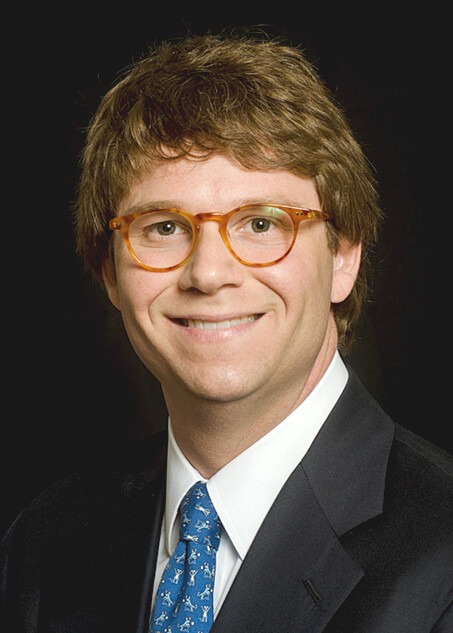
A Houston trial lawyer since 2009, representing injured people and their families, and defending the accused in DWI and criminal cases. Jay is an ACS-CHAL Forensic Lawyer-Scientist, a certified practitioner and instructor of Standardized Field Sobriety Testing, a certified Drug Recognition Expert, and trained in forensic chromatography. He is a member of the National College for DUI Defense, a founding member of the DUI Defense Lawyers Association, and a commissioner on the Texas Indigent Defense Commission, appointed by Gov. Abbott in 2023.
Last reviewed July 2026 · This article is legal information, not legal advice. Read Jay’s full bio →